Architectural Gemology: Visual Diagnostics, Mechanical Durability, and Particulate Management
Operating across three decades as a global mineral procurement specialist, my fieldwork spans from the arid pegmatite excavations of Namibia’s Erongo Mountains to the curated spatial design studios of Manhattan. Within the discipline of architectural aesthetics and historical energetic curation, few geological specimens command the universal recognition of Schorl—mechanically classified as Black Tourmaline.
The contemporary metaphysical marketplace presents a complex landscape saturated with synthetic extrusions, chemically altered composites, and exaggerated marketing narratives. As spatial designers increasingly specify this mineral to anchor interior environments, a fundamental inquiry emerges: does this specimen function objectively within a curated space, or has it devolved into a commodified aesthetic trend?
Addressing this requires discarding romanticized folklore in favor of a thematic analysis rooted in material science. This comprehensive overview will dissect the visual diagnostics, mechanical limitations, and the specific particulate management protocols required to integrate this geological asset into modern architectural spaces, while acknowledging its rich historical context.
1. Precise Positioning & Core Metrics: The Anchor of Lifestyle Aesthetics
The Spatial and Aesthetic Market Positioning
Within the current paradigm of interior curation, Schorl functions as an aesthetic anchor. Unlike fragile ornamental specimens, this mineral operates as a highly functional design element. Procuring this stone demands a calculated approach to spatial harmony rather than a casual acquisition.
Integrating this material into a living space requires an understanding of its physical presence and how its dense visual weight alters the geometry of a room.
Visual Diagnostics and Aesthetic Authenticity
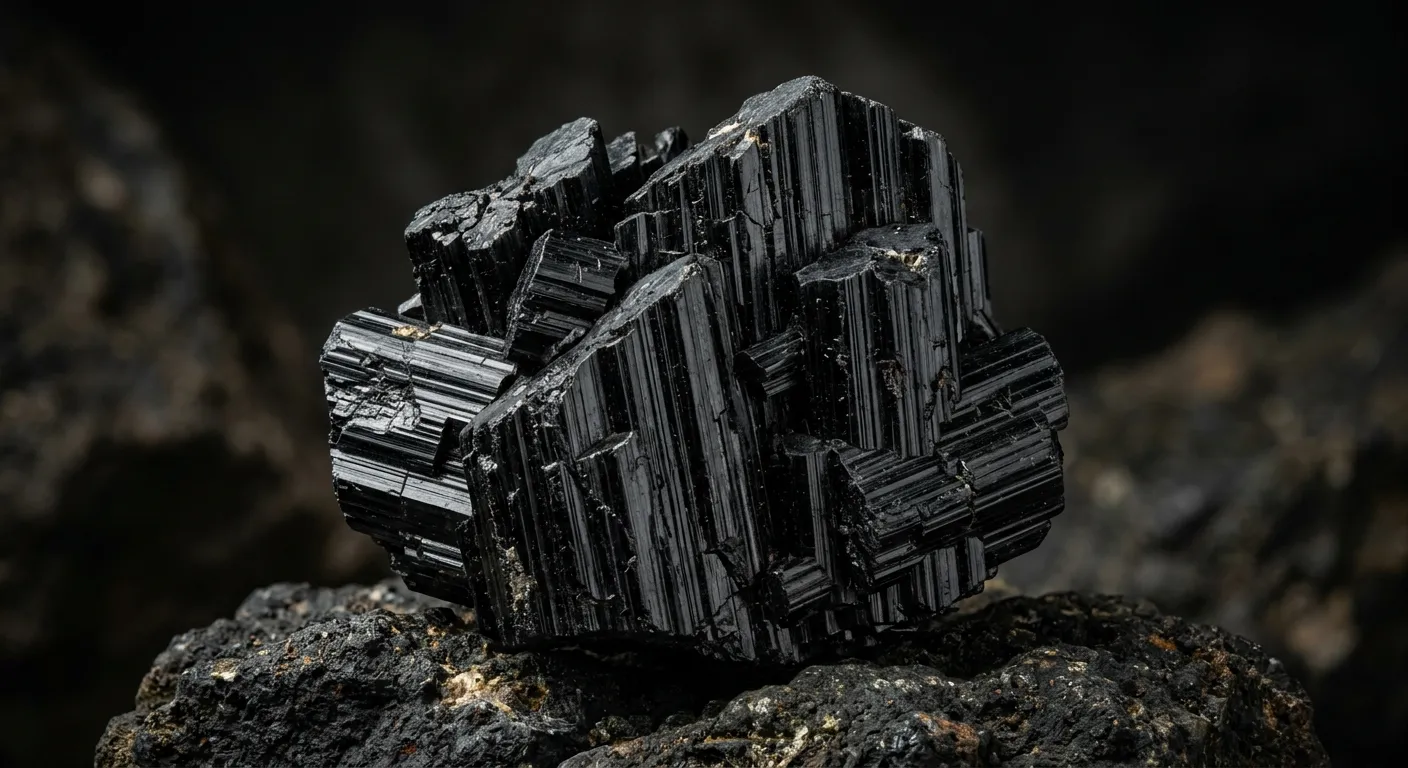
Evaluating a specimen requires strict adherence to geological signatures. Authentic formations display raw, unadulterated crystallization patterns. Over-polished, unnaturally glossy surfaces immediately signal synthetic manufacturing. A genuine specimen must retain the chaotic, asymmetrical beauty inherent to natural tectonic formation.
Thermal Conductivity and Tactile Density
Genuine Schorl registers a specific gravity between 3.00 and 3.26, translating to a substantial, satisfying physical heft. Furthermore, its measurable thermal conductivity ensures the material registers distinctly cold upon initial physical contact.
This immediate thermal transfer serves as a primary baseline metric during field evaluations.
Material Density & Thermal Baseline
Comparative analysis of specific gravity metrics
Mechanical Cohesion and Structural Integrity
While registering adequately on the Mohs scale, the internal architecture demands specific handling protocols. A premium specimen maintains its structural integrity without exhibiting excessive particulate shedding or mechanical failure.
Evaluating the cohesion of the crystalline matrix separates investment-grade minerals from structurally compromised cast-offs.
Value-to-Cost Ratio and Spatial Anchoring
The ultimate valuation of the mineral relies on its capacity to ground a room's aesthetic. High-grade, ethically excavated clusters present a superior value-to-cost proposition compared to chemically synthesized replicas. Buyers must weigh the physical dimensions and geological rarity against the requested capital investment.
The Sensory Experience of Authentic Schorl
Handling genuine Schorl delivers a pronounced sensory feedback loop. The material feels dense and rugged, commanding a quiet architectural authority. The optical interaction of light across its naturally formed surfaces produces a matte-to-vitreous luster impossible to replicate through industrial casting. This verifiable sensory feedback separates a legitimate spatial investment from a manufactured polymer trinket.
2. Deep Anatomy & Horizontal Comparison: The Mineralogical Blueprint
Decoding the Striated Architecture
Surface topography offers a definitive map of geological formation. The primary visual diagnostic of raw Schorl involves its distinct vertical grooves running parallel to the primary crystalline axis. These formations represent the architectural fingerprint of the mineral rather than manufacturing defects.
Even when a specimen undergoes heavy industrial polishing, a trained observer can frequently identify the residual directional growth vectors beneath the exterior plane.
The Electro-Sensory Phenomenon
One fascinating mechanical reality dictating specialized maintenance involves the material's inherent pyroelectric and piezoelectric properties. Subjecting the crystal to thermal fluctuations or mechanical pressure generates a measurable electrical polarization at its opposing terminals.
Within a standard interior environment, this physical mechanism causes the mineral to actively attract small pieces of paper or dust directly from the ambient air.
While historical texts interpret this as absorbing negative frequencies, the objective mechanical reality dictates that the specimen operates as a literal particulate magnet requiring rigorous maintenance.
Black Tourmaline vs Black Obsidian: A Horizontal Analysis
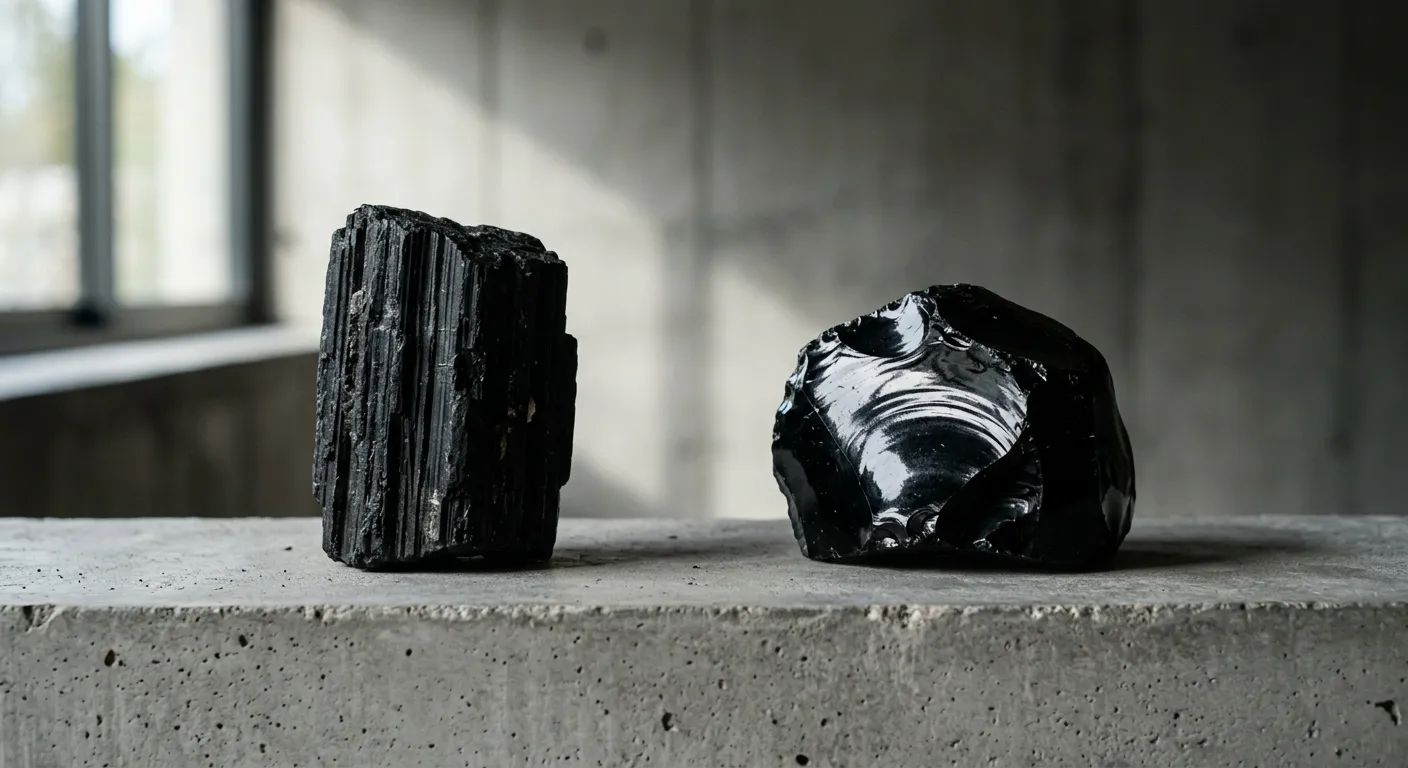
Procurement specialists frequently navigate the architectural choice of black tourmaline vs black obsidian. While historically categorized together in protective folklore, their mechanical anatomies diverge completely.
Tourmaline forms as a complex crystalline borosilicate within slowly cooling pegmatites, whereas obsidian emerges as an amorphous volcanic glass resulting from rapid thermal drops in lava. Materially, obsidian presents a hard, highly reflective surface that fractures with sharp, conchoidal patterns.
Conversely, Schorl exhibits a heavily textured, matte-to-resinous finish that separates along its natural vertical ridges. Designing a visually absorbing, textured space favors the borosilicate, while highly reflective, modern aesthetics align better with the volcanic glass.
Material Limitations and Fracture Risks
A fundamental engineering reality often misunderstood by consumers involves the inverse relationship between hardness and toughness. Registering between 7 and 7.5 on the Mohs scale ensures the material resists surface scratching effectively.
However, the complex, heavily striated internal architecture renders the specimen highly vulnerable to kinetic impact. The mineral is definitively hard but brittle avoid drops under all circumstances.
Subjecting the crystal to a singular kinetic shock against a hardwood surface will reliably induce catastrophic fracturing along its natural cleavage planes.
3. Risk Mitigation & Verification: Navigating the Counterfeit Minefield
Identifying Synthetic Replicas
Surging market demand has catalyzed a sophisticated counterfeit industry. Identifying the signs of fake black tourmaline remains straightforward for educated buyers. Manufacturers frequently substitute dyed glass, hardened epoxy resins, or low-grade obsidian.
The primary diagnostic failure of a synthetic extrusion is a perfect appearance without natural imperfections. Geological formation remains inherently chaotic; specimens presenting as flawlessly cast geometry warrant immediate skepticism.
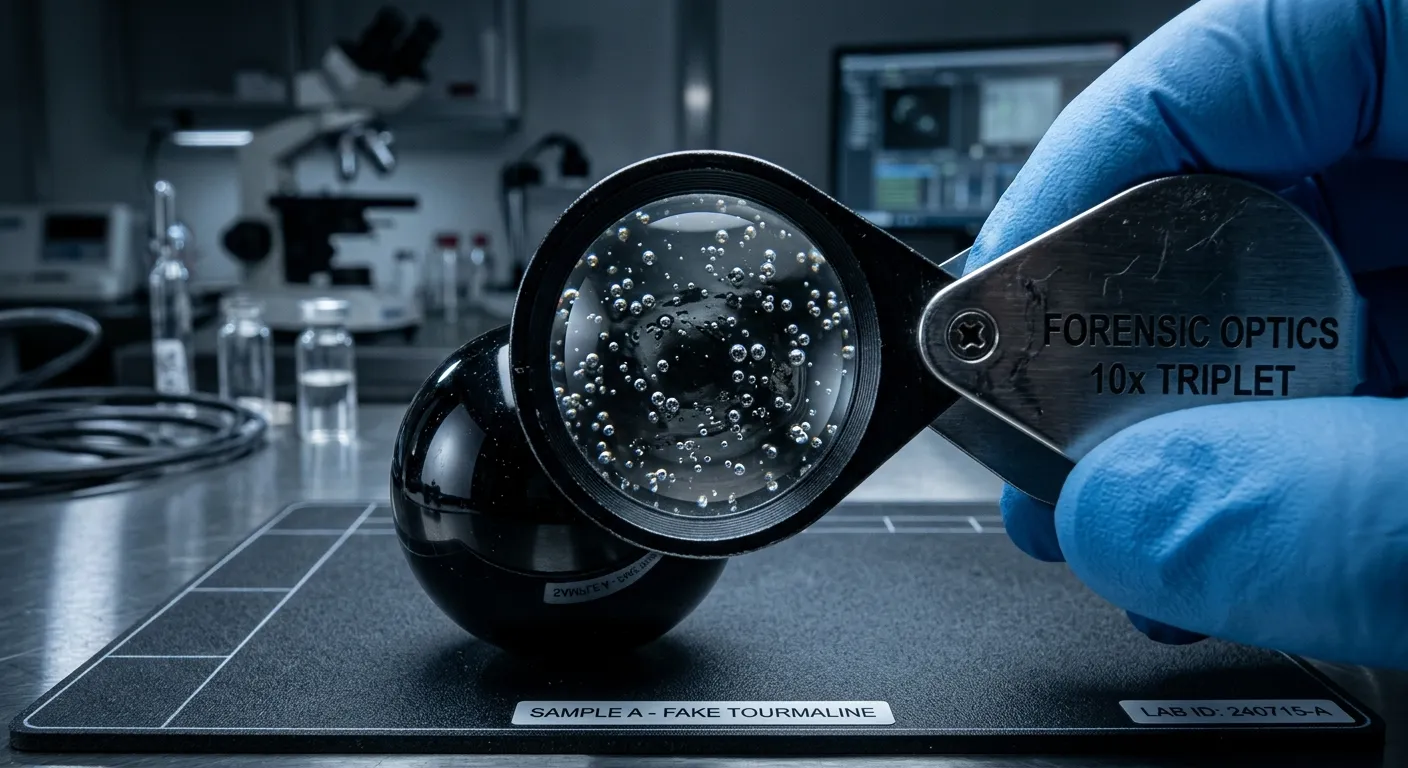
Furthermore, detecting the presence of air bubbles suspended beneath the exterior plane provides absolute confirmation of manufactured glass or resin, as natural borosilicate structures never encapsulate spherical gas pockets during formation.
"Pitfall Breakdown: The Resin Trap
A recent consultation illustrates this vulnerability perfectly. An architectural firm requested authentication of a massive spherical specimen procured for a luxury installation. Initial qualitative observation triggered immediate mechanical red flags. The object presented an unnaturally low specific gravity relative to its volume.
Upon checking temperature and texture, the surface registered as tepid and slightly viscous—a sharp deviation from the rapid thermal conductivity of genuine stone. Microscopic inspection revealed perfectly spherical internal voids.
A discreet thermal probe applied to the base produced the distinct chemical odor of melting polymers, confirming the client had acquired a cast epoxy sphere rather than a geological artifact.
Field-Testing Authenticity
Establishing how to tell if black tourmaline is real requires basic forensic methodology. The initial non-destructive assessment involves holding it under a bright light, specifically targeting the thinnest margins of the specimen.
Genuine iron-rich Schorl may transmit faint, muddy red or brownish wavelengths at its absolute thinnest edges under intense illumination. Specimens transmitting bright blue or green wavelengths, or remaining entirely opaque without any edge variation, indicate synthetic origins.
The Steel and Scratch Protocol
For absolute mechanical verification, owners may execute a scratch test assessing hardness. Given its 7-7.5 Mohs rating, the natural mineral exceeds the hardness of standard carbon steel. By discreetly rubbing the surface with a steel blade, one can evaluate material density.
A standard blade (Mohs 5.5) will glide across the authentic mineral, potentially depositing a superficial metallic streak, yet it will never penetrate the crystalline structure. Conversely, blades that easily gouge the material and produce a white powder trail confirm the presence of polymers or softer substitute minerals.
4. Use-Case Adaptation & Value Assessment: Curating Your Spatial Energy
Spatial Dynamics and Material Pairing
Within spatial design, this mineral frequently requires complementary materials to balance its dense visual weight. Strategic placement of secondary geological specimens creates a cohesive architectural narrative.
Amplification via Clear Quartz
Integrating a crystalline silicon dioxide (Clear Quartz) point adjacent to the Schorl establishes a dynamic visual and thematic loop. The dense, light-absorbing properties of the dark mineral contrast sharply with the highly refractive, optically clear quartz, creating a balanced architectural focal point.
Softening Aesthetics with Rose Quartz
For environments designed around rest, pairing the stark, rugged barrier of the dark borosilicate with the diffuse, pink hues of Rose Quartz offers excellent visual harmony. The dark specimen provides visual gravity, while the softer mineral introduces a warmer chromatic spectrum to the installation.
Thematic Reset via Selenite
Historically utilized in folklore as a cleansing agent, Selenite (gypsum) provides a striking textural contrast. Resting the dark, heavily grooved specimen upon a smooth, fibrous Selenite plate creates a compelling material juxtaposition while aligning with traditional maintenance aesthetics.
High-Density Desk Installations
Environments saturated with electronic hardware benefit from medium-sized, raw logs measuring approximately three to four inches. Positioned directly adjacent to monitors, the raw, unpolished topography offers a necessary organic contrast to the sterile, injection-molded plastics of contemporary technology.
Mobile Sanctuary Procurement
Micro-investments in tumbled or tightly wire-wrapped specimens serve well in mobile environments. Given the extreme thermal fluctuations and continuous kinetic vibration inherent to automotive interiors, selecting a mechanically stabilized piece prevents the brittle material from degrading over time.
Architectural Centerpieces
Luxury installations demand massive, multi-terminated raw clusters, particularly those excavated from the Erongo region. These large-scale formations transcend basic accessory status, functioning as formidable sculptural elements that dictate the visual gravity of an entire room.

Particulate Management and Maintenance
Procuring premium specimens necessitates strict adherence to maintenance protocols. The aforementioned electrical polarization guarantees rapid accumulation of environmental particulate. To manage this mechanical reality, owners must wipe it with a soft cloth—specifically a dry microfiber textile—on a highly regular schedule.
Utilizing aerosolized chemical dusters degrades the natural luster and deposits viscous residues within the vertical striations. Furthermore, operators must avoid saltwater cleansing entirely.
While aqueous sodium chloride solutions feature heavily in quartz maintenance folklore, the microscopic fissures and high iron content within raw Schorl render it highly vulnerable to rapid oxidation and structural failure when exposed to saline moisture.
The Value-to-Cost Ratio Framework
Justifying the acquisition cost relies entirely on provenance, mechanical condition, and visual impact. A small, tumbled specimen from Brazil delivers excellent, portable utility at a highly accessible price point.
Conversely, a museum-grade cluster exhibiting pristine terminations, deep striations, and a contrasting white albite matrix commands a premium based on its geological rarity and immense aesthetic presence. Buyers invest not merely in a block of boron silicate, but in a geological artifact shaped by millions of years of tectonic pressure.
Mastering visual diagnostics, respecting its mechanical fragility, and adhering to strict particulate management ensures the specimen remains a permanent, visually arresting anchor within any curated space.
Academic & Gemological References
-
RRUFF / American Mineralogist (1995)
Tourmaline structure and chemistry -
Gemological Institute of America (GIA) (2023)
Some Gemological Challenges in Identifying Black Opaque Gem Materials -
Journal of Geosciences (2011)
Nomenclature of the tourmaline-supergroup minerals